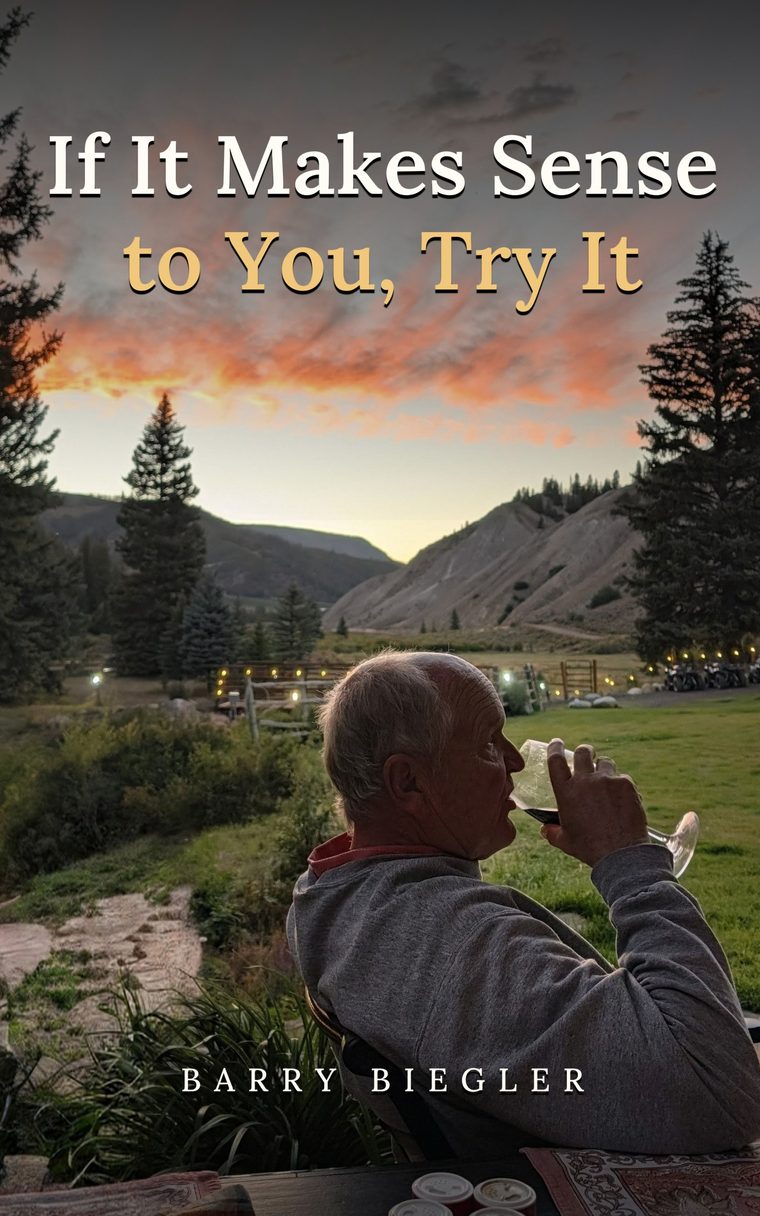
From the book If It Makes Sense to You, Try It, by Barry Biegler
Making Decisions Phrases
Ask Yoda—You May Already Know the Answer
If Logic Fails, You May Still Know the Answer
Watch Out for “I Don’t Know”—Because You Probably Do Know
Difficulty Deciding May Mean Both Choices Are Good
Throw It Against the Wall and See What Sticks
Don’t Make Decisions Today You Don’t Have to Make Today
Decisions Need a “Switchover Moment”
The Devil You Know or the Devil You Don’t Know
That Is a Blue Straw Problem
I had a good friend planning a big wedding. There were a million things to think about, including the invitation list, venue, drinks, hors d’oeuvres, dinner, speeches, first dance, transportation, seating charts, on and on. At one point my friend was trying to decide on the color of the straws for the drinks and showed me a blue one and a red one. I remember laughing and replying, “Are you kidding me? Nobody will care. It’s going to be a great wedding. Relax and enjoy it.” My friend got it, lightened up, and we now joke about a decision of this nature as a “Blue Straw Problem.”
Whenever I find myself stressing over some issue or decision that is very minor, I will often think, “Wow, another Blue Straw Problem.” It reminds me to either forget the issue or make a quick decision, perhaps flip a coin.
Blue Straw Problems don’t have to be as silly and minor as the color of a straw. Should I add three more phrases to this book, or six, or ten? Or none? Stressing over that decision is actually just stopping the completion of the book, and a few phrases more or less won’t make any difference.
It’s a Blue Straw Problem.
Ask Yoda—You May Already Know the Answer
At a seminar in the 1970s I was told to relax, picture the wisest person I could imagine, walk up, and ask the question I had been chewing on. I pictured Yoda. The question was Chicago or Los Angeles, which I had debated for a year. Yoda answered “Los Angeles” in about three milliseconds. Yoda was me; I had known all along. I still do it with hard decisions: clear away the arguments, ask straight out, and listen. The answer isn’t automatically right, but it is mine, and it is rarely wrong.
This is a short overview. The complete phrase, with the story behind it, is in the book. 14 complete sample phrases are available on the links below.
If Logic Fails, You May Still Know the Answer
Sometimes I get two answers to the same question: one from step-by-step reasoning I can explain, and one from the part of me I call Yoda. A chain of logic can seem to prove that a rabbit running twice as fast can never pass a turtle with a head start. Yoda says that can’t be right, even if he can’t find the flaw. Either side can be wrong: logic from a bad assumption, Yoda from fear or wishful thinking. When they agree, I go. When they argue, I don’t follow either one blindly; I dig further.
This is a short overview. The complete phrase, with the story behind it, is in the book. 14 complete sample phrases are available on the links below.
Watch Out for “I Don’t Know”—Because You Probably Do Know
There are two kinds of “I don’t know.” Not knowing whether the Cubs play tomorrow is harmless. “I don’t know what to do” about something important is usually a cover story. I once said it about two assistant coaches who screamed at kids, and the truth was I knew exactly what to do and was afraid of the fallout. The boss I hate, the mother-in-law who drops in, the credit card debt: in each case the next step is known and unpleasant. When I hear myself say it, I ask whether that is really true. Usually it isn’t.
This is a short overview. The complete phrase, with the story behind it, is in the book. 14 complete sample phrases are available on the links below.
Difficulty Deciding May Mean Both Choices Are Good
Easy decisions are easy because the choices aren’t close: a picnic in a tornado warning versus staying home. The ones that kept me up at night, like picking between two vacation spots, were hard because the two were nearly equal. I used to assume I needed more information, read more reviews, and put off booking until the tickets cost more. There was no hidden right answer. Both trips would have been great. Now, when I have done the work and the choices still come out even, I stop hunting for a difference and pick, sometimes with a coin.
This is a short overview. The complete phrase, with the story behind it, is in the book. 14 complete sample phrases are available on the links below.
That Is a Blue Straw Problem
A friend planning a big wedding was agonizing over whether the drink straws should be blue or red. I laughed and told him nobody would care and the wedding would be great either way. We still call that kind of decision a Blue Straw Problem. When I catch myself stressing over something small, the phrase reminds me to drop it or decide in ten seconds. It doesn’t have to be as silly as a straw: three more phrases in this book, or six, or none, changes nothing except whether the book gets finished.
This is a short overview. Read the entire phrase. 14 complete sample phrases are available on the links below.
Start With the Best Possible
A friend spent weeks reading reviews and quizzing salespeople to find the best computer monitor and never bought one. My approach: check the priciest model first; if I can afford it, that is the one. If not, go one step down and ask again until one fits. The costliest isn’t always the best and a cheaper one might have done, but two weeks of shopping is not cheap either. When I built a 17,000-square-foot office with 250 decisions, I told the consultant to pick the highest-quality product that did the job, then asked where to trim to hit the budget.
This is a short overview. The complete phrase, with the story behind it, is in the book. 14 complete sample phrases are available on the links below.
Throw It Against the Wall and See What Sticks
Try a lot of ideas, keep the ones that work, and don’t let the analysis stop you. It is this book’s title in other words, and for some reason this version pops into my head more often. At my software company we once debated marketing choices meeting after meeting, always needing more data, and did no marketing at all. The cure was to pick one, run it, measure it, and let the market vote. Most ideas fail before one sticks, which is why the method only works once you stop being afraid to be seen failing.
This is a short overview. The complete phrase, with the story behind it, is in the book. 14 complete sample phrases are available on the links below.
Don’t Make Decisions Today You Don’t Have to Make Today
I used to write five-year plans because the business books said to. The world changed after the first item or two and the plan was useless. What kept me from starting this book was trying to settle everything at once: which phrases, which editor, which publisher, paperback or hardback. The only decision I actually needed was to start writing. Vacations got easier the same way. Pick the destination, buy the tickets, book the hotel, and leave where to eat on day three for day three.
This is a short overview. The complete phrase, with the story behind it, is in the book. 14 complete sample phrases are available on the links below.
Decisions Need a “Switchover Moment”
Every big decision needs a moment when the analyzing stops and the work of making it succeed begins. I learned it from a veteran pro hockey coach who gathered everyone’s opinions the day before a championship game, then cut me off the next morning: the decision is made, here is your part. We won. Now I pick a date and time for the decision, sometimes on my calendar, and tell everyone involved when it is. Before it, I want objections. After it, I want help. Doubt and discomfort are not new information.
This is a short overview. The complete phrase, with the story behind it, is in the book. 14 complete sample phrases are available on the links below.
The Devil You Know or the Devil You Don’t Know
The replacement has flaws too; I just don’t know them yet. Hotels left my software over one missing feature, and when I checked back six months later most of them hated the new system because it was missing fifteen things mine did well. When one problem with an employee or a product gives me tunnel vision, this phrase makes me weigh the whole set of pros and cons against an unknown. I will still make a change when the problems are serious, but I expect the new devil to bring some of its own.
This is a short overview. The complete phrase, with the story behind it, is in the book. 14 complete sample phrases are available on the links below.
Pick Your Geography, Not Your Job
In graduate school I had no idea what career I wanted, but I knew I was sick of Boston winters and wanted California. I went to Los Angeles with no job waiting, and it turned out to be one of the best moves of my life. Nine years later the drive home from skiing at Mammoth got sadder every trip, so I quit and moved to Vail. The kids I have coached mostly can’t name a career either, but every one of them knows whether they love cities, mountains, or beaches. Go live there and let the job sort itself out.
This is a short overview. The complete phrase, with the story behind it, is in the book. 14 complete sample phrases are available on the links below.
You Don’t Necessarily Have to Have a “Great Job”
I grew up on a short list of great jobs, doctor, lawyer, anything high-paying in business, and never considered the rest. Then I moved to Vail and met a bartender who, with his bartender wife, worked hard for six months and had the other six free to travel the world. In my last ten years running a company I had maybe twenty weeks off. They had 260. Who had the great job? I am not telling anyone to quit and tend bar. I am telling eighteen-year-old Barry the list he was handed is too short, and some jobs on it are miserable.
This is a short overview. The complete phrase, with the story behind it, is in the book. 14 complete sample phrases are available on the links below.
A book of 127 helpful short phrases divided into 11 categories.
Complete Phrases Samples
Fourteen phrases from the book, complete. Click one to read it.